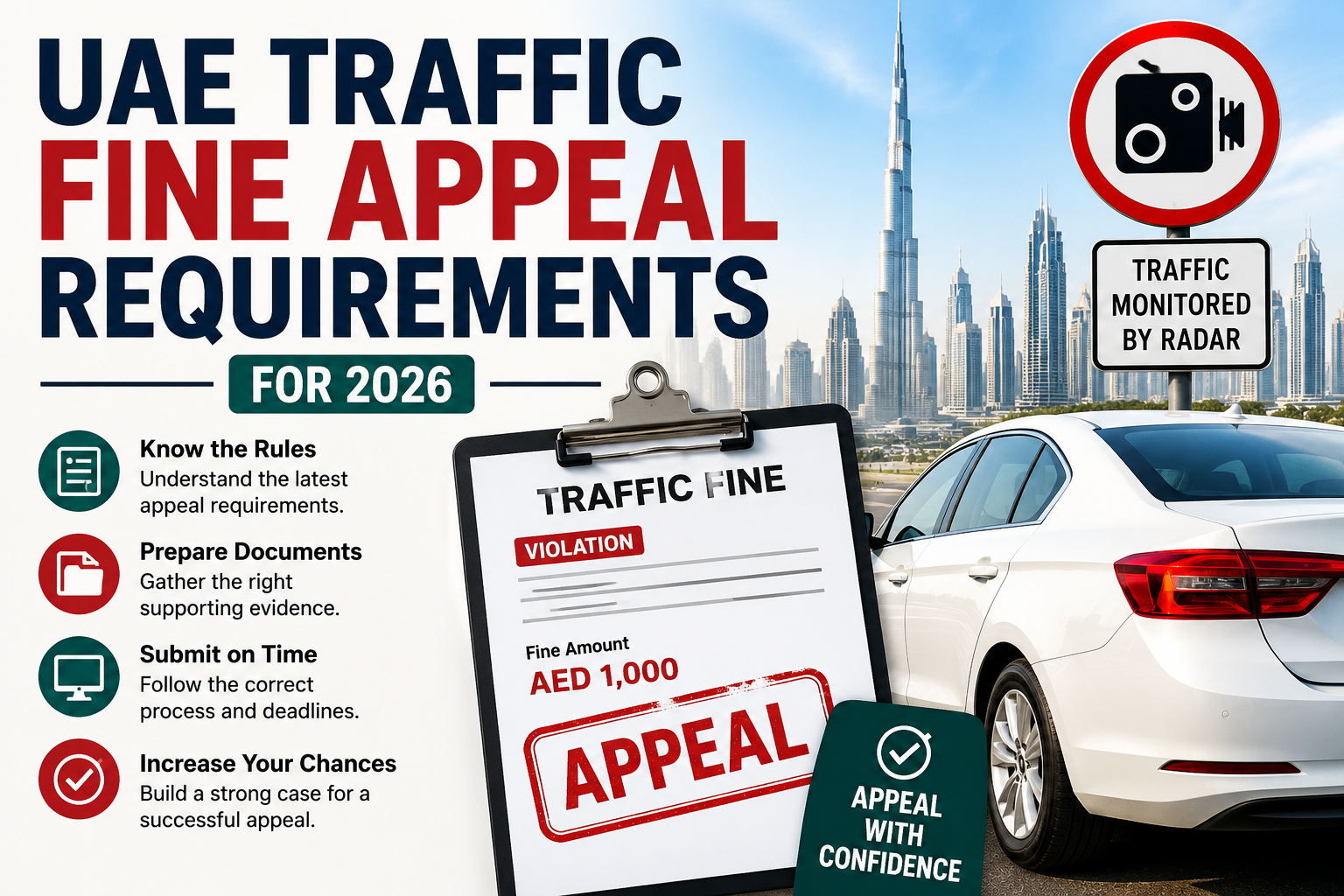
Discover the exact requirements for appealing a traffic fine in the UAE. Learn what evidence authorities accept, how to prepare your case, and what to expect after submission. Read the guide and avoid costly mistakes.
UAE Traffic Fine Appeal Requirements for 2026
Motorists across the United Arab Emirates occasionally encounter traffic penalties they believe were issued in error. While the nation’s road enforcement framework is renowned for precision and technological sophistication, discrepancies can still emerge. In such circumstances, the appeal mechanism serves as a lawful avenue through which drivers may challenge questionable violations.
Understanding the UAE Traffic Fine Appeal Process
A traffic fine appeal is a formal petition requesting authorities to reassess a recorded violation. This procedure allows vehicle owners and drivers to present supporting evidence, clarify misunderstandings, or contest inaccuracies connected to a traffic offense.
As regulatory systems continue evolving throughout 2026, motorists are expected to adhere to specific procedural requirements before an appeal can be reviewed.
Essential Eligibility Criteria
Not every citation automatically qualifies for reconsideration. Applicants typically need to demonstrate a legitimate basis for disputing the violation. Common grounds include:
- Incorrect vehicle identification.
- Duplicate penalty issuance.
- Technical malfunction involving surveillance equipment.
- Administrative or clerical inaccuracies.
- Verifiable evidence proving the vehicle was elsewhere during the alleged offense.
Authorities generally expect appellants to provide factual substantiation rather than subjective disagreement with the penalty itself.
Documentation Commonly Required
A compelling appeal is often supported by a comprehensive evidence portfolio. Depending on the nature of the dispute, applicants may be required to furnish:
Personal Identification
Valid identification documents remain fundamental. These may include:
- Emirates ID.
- Passport copy.
- UAE driving license.
Vehicle Records
Ownership verification frequently forms a crucial component of the review process. Relevant records may include:
- Vehicle registration card.
- Lease agreement for rented vehicles.
- Fleet ownership documentation for commercial entities.
Supporting Evidence
The strength of an appeal frequently hinges upon corroborating materials, such as:
- Dashcam recordings.
- CCTV footage.
- GPS location logs.
- Photographic evidence.
- Witness statements.
- Maintenance reports confirming vehicle inactivity.
The more persuasive and verifiable the evidence, the greater the likelihood of a favorable reassessment.
Submission Channels Available in 2026
Traffic authorities increasingly utilize digital ecosystems to streamline dispute resolution. Appeals may generally be submitted through:
- Official police portals.
- Smart government applications.
- Customer happiness centers.
- Traffic department service counters.
- Designated judicial channels for escalated disputes.
Applicants should ensure that all uploaded files are legible, complete, and submitted within the prescribed timeframe.
Time Limits Matter
One of the most overlooked aspects of the appeal process is timing. Delayed submissions can significantly diminish the possibility of review. Motorists should initiate their challenge promptly after discovering a violation.
Waiting several months before filing can complicate evidence verification and administrative processing.
Common Reasons Appeals Are Rejected
Many applications fail not because the violation was unquestionably valid, but because the supporting submission lacked credibility or completeness.
Frequent rejection triggers include:
- Insufficient documentation.
- Missing identification records.
- Contradictory evidence.
- Expired submission deadlines.
- Appeals based solely on financial hardship.
Authorities generally evaluate factual merit rather than personal inconvenience.
What Happens After Submission?
Following receipt of an appeal, officials conduct a structured examination of the provided materials. Depending on complexity, the review may involve:
- Verification of camera records.
- Examination of enforcement logs.
- Cross-referencing vehicle information.
- Technical assessment of evidence submitted by the appellant.
Once the review concludes, authorities typically issue a determination confirming, modifying, or canceling the violation.
Practical Tips for a Stronger Appeal
Drivers seeking a successful outcome should prioritize accuracy and organization. Consider the following recommendations:
- Submit evidence immediately after discovering the fine.
- Present information chronologically.
- Avoid emotional arguments.
- Include only relevant supporting materials.
- Retain copies of every submitted document.
A concise, evidence-driven appeal often carries greater persuasive weight than lengthy explanations lacking verification.
Final Thoughts
The UAE Traffic Fine Appeal Requirements for 2026 underscore the importance of procedural precision, documentary support, and timely action. While the nation’s traffic enforcement infrastructure is highly advanced, lawful mechanisms remain available for motorists who believe a penalty has been issued unfairly. By preparing a meticulously documented appeal and adhering to official requirements, drivers can substantially improve their prospects of obtaining a fair and impartial review.